Proto-Muppet Protection Racket Advertising

May 17th, 2008

There is an extensive explanation for this wild and bizarre sequence at the Muppet Wiki. Here’s a bit of it:

In 1957, Jim Henson was approached by a Washington, D.C. coffee company to produce ads for Wilkins Coffee. The local stations only had ten seconds for station identification, so the commercials had to be lightning-fast — essentially, eight seconds for the commercial pitch and a two-second shot of the product.

From 1957 to 1961, Henson made 179 commercials for Wilkins Coffee and other Wilkins products, including Community Coffee and Wilkins Tea.

This bit of weirdness brought to me by fellow VHiver, Mike Barklage.

Compare and contrast

May 16th, 2008

High culture:

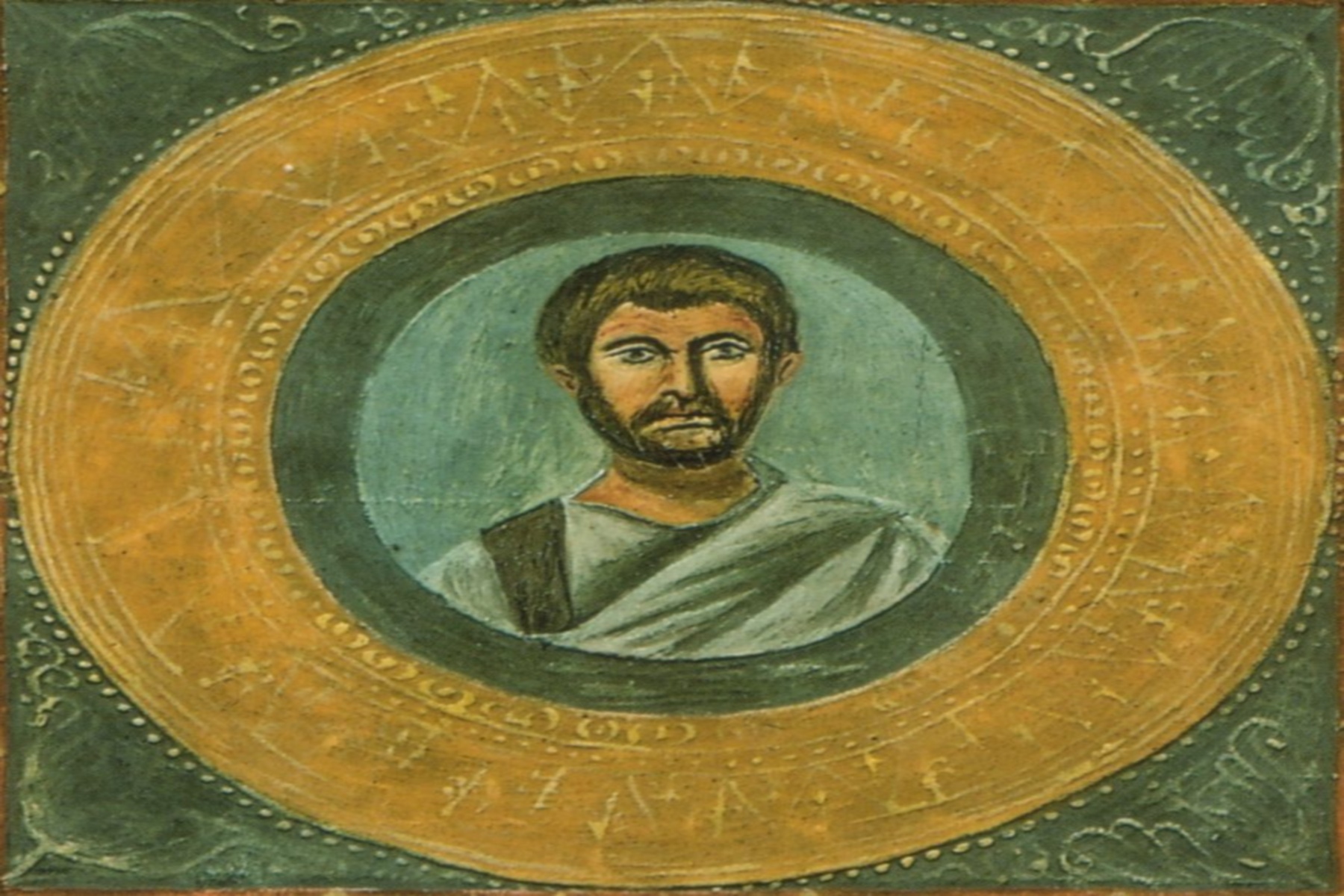
Pogany Illo.Why, all the Saints and Sages who discuss’d
Of the Two Worlds so wisely–they are thrust
Like foolish Prophets forth; their Words to Scorn
Are scatter’d, and their Mouths are stopt with Dust.

Myself when young did eagerly frequent
Doctor and Saint, and heard great argument
About it and about: but evermore
Came out by the same door where in I went.

With them the seed of Wisdom did I sow,
And with mine own hand wrought to make it grow;
And this was all the Harvest that I reap’d–
“I came like Water, and like Wind I go.”

versus pop culture:

Like I Told Ya... What I Said...It’s the same story the crow told me; it’s the only one he knows.
Like the morning sun you come and like the wind you go.
Ain’t no time to hate, barely time to wait,
Wo-oah, what I want to know, where does the time go?

A recent argument about whether or not some of my friends had let some of the really annoying fans of the Dead colour their impressions of the actual works of the band has had me listening to them a lot this week. And I’ve just been reading something that put old Omar into my head.

Explanation

May 15th, 2008

I spent some time last week at a professional conference. For the most part it was a relatively valuable use of my time, but there were significant portions of time where I was stuck sitting in a room with lots of people while a particularly boring speaker was presenting. I was without a computer–the conference expressly frowned on bringing one into the hall–so all I had to amuse myself was the notebook the conference had provided, and a pad of paper that the hall had provided.

Since I had recently been reading about the Oak Island thing, the notion of simple substitution ciphers using graphics–and how simple they are to decode for anyone with any small interest–was in my head.

So, I thought it would be funny to whip up my own simple graphic substitution cipher, and leave encoded notes behind whenever I changed seats between sessions. Since the audience was entirely composed of highly technical people with solid analytical skills, it seemed likely that anyone sitting down would recognize that there was a coded message, and would be able to decrypt the code with a little effort. So, part message in a bottle, part altruism–giving the other attendees something to distract them for a few minutes during boring sessions.

When I got back I dropped into FontStruct and whipped up a font mapping the symbols from my cipher, so that I could easily generate messages. (Boy, I love that FontStruct.) I’m tempted to print out a couple of pages of coded messages–maybe Zen koans–and leave them around the city in an act of benevolent surrealism (like the physics warnings).

Hence the last message–it was slightly more tricky than most substitutions because it was a small sample of ciphertext and not in English, but on the other hand the punctuation was a pretty broad clue to that.

After the jump, a bigger sample–four parts of one document (in English), which should make it possible for anyone with a bit of nerd puzzle fascination to figure it out. Read the rest of this entry »

A Small Challenge

May 14th, 2008

Answer, and explanatory story, to follow.

Very simple encryption

On the off chance that someone comments with the plaintext before I get around to telling the story, I will send them a $20 Amazon gift certificate or something like that.

What You Need To Know

May 9th, 2008

I have been insanely busy and travelling all week. This will continue tomorrow, hopefully reaching a peak so that things will mellow out a bit into the weekend.

The remainder of this post is for the gentleman who, when challenged by me today asked me with a straight face “You don’t need proof that 1+1=2, do you?”

Principia

For those of you who don’t speak formal logic, you may translate this reply as “Actually, I do. And you want to believe that if I won’t take 1+1=2 on faith, then I’m certainly not going to give any credence to whatever crap you happen to think is ’self-evident’ without at least a whiff of rational evidence.”

Yes, I just made up the term “Doom Constant”

May 8th, 2008

Remember Nick Bostrom? And remember the Drake Equation?

Well, the two have met, as illustrated in MIT’s Technology Review this month, in Bostrom’s article, Where Are They.

Bostrom suggests, although he doesn’t put it in these terms, that the reason we haven’t met the aliens yet is that Drake’s equation is missing a Doom Constant that models some sort of filter tendency that causes a (probably very high) percentage sufficiently advanced societies to self-immolate.

The more disconcerting hypothesis is that the Great Filter consists in some destructive tendency common to virtually all sufficiently advanced technological civilizations. Throughout history, great civilizations on Earth have imploded–the Roman Empire, the Mayan civilization that once flourished in Central America, and many others. However, the kind of societal collapse that merely delays the eventual emergence of a space-colonizing civilization by a few hundred or a few thousand years would not explain why no such civilization has visited us from another planet. A thousand years may seem a long time to an individual, but in this context it’s a sneeze. There are probably planets that are billions of years older than Earth. Any intelligent species on those planets would have had ample time to recover from repeated social or ecological collapses. Even if they failed a thousand times before they succeeded, they still could have arrived here hundreds of millions of years ago.

At a high level the article is Bostrom hoping we don’t find any evidence of any other life, since the longer it looks like we’re the only one, the more likely it is that we’ve already won the Great Filter lottery, rather than being on the doomed side of it.

As an aside, I find it amusing somehow that Bostrom devotes significant space to dealing with the possibility that the aliens are there, but hidden from us, but he never gets near the possibility that the “Great Filter” might actually be intelligent, outside action, rather than a self-destructive tendency. He neither considers the Heechee hiding in their black hole, or the Assassins and their inimical actions–and it’s too bad, since there’s some fun thinking to be done on those scenarios, even if they are less likely than what Bostrom is playing with.

The piece is worth a read for science fiction fans and those interested in the Fermi Paradox.

Crazy religious people have their priorities in order

May 7th, 2008

Tired of paying through the nose, Americans try praying at the pump
“Lord, the prices at this pump have gone up since last week. We know that you are able, that you have all the power in the world,” he prayed, before former beauty queen Rashida Jolley led the group in a modified version of the spiritual, “We Shall Overcome”.

“We’ll have lower gas prices, we’ll have lower gas prices…” they sang.

At the weekend, Twyman had led a group of around 200 people in prayer at pumps in San Francisco, where gas is touching the four-dollars-a-gallon mark.

Yup, that’s got to be the most important thing we could ask the Divine Creator for. Can’t think of anything higher priority.

Still true after more than 40 years

May 7th, 2008

The point is that (little-t) truth is a matter of definition relative to the grid one is using at the moment, and that (capital-T) Truth, metaphysical reality, is irrelevant to grids entirely. Pick a grid, and through it some chaos appears ordered and some appears disordered. Pick another grid, and the same chaos will appear differently ordered and disordered.

Fnord.

Microfinance, Aggregation, Kiva

May 5th, 2008

One of those concepts that most North Americans don’t run into everyday is that of microfinance. You can read about it at the link, but in a nutshell it’s the idea that even “poor” people need access to financial services.

One particular area where this is true is financing for the small–by North American standards–loans that entrepreneurs in third world countries need to establish or grow their businesses. It seems obvious that funding for this kind of endeavour could result in economic growth in less privileged areas, that could in turn result in improvements in the quality of life. Maybe it’s not a gigantic effect on a global scale, but for each individual case it’s pretty gigantic for that person. The journey of a thousand miles, etc.

Of course for this to work, there would need to be someone who was qualified to determine which people were good candidates for success, so that the default rates on these loans would be low.

And even though these loans would be small compared to commercial loans in North America, they might seem like a lot more money that most people who were inclined to help out might have around. $300 or $1000 isn’t a very big loan really, but there probably aren’t a lot of people around who would happily front that much money to someone halfway around the world.

This is where the Internet and modern technology kicks in. This is what Kiva.org is all about.

How it works is simple: Kiva partners with microfinance companies in the regions where these entrepreneurs are. These partners pick out candidates who will be able to repay the loans. The loan requests are posted on Kiva.org. People who can afford to loan some money come to Kiva, and assign their money to various loans. I might put $25 a month into my Kiva account, and assign that $25 to be part of any of hundreds of loans. When enough people have committed money to any given loan to fund it, the loan is disbursed. The entrepreneur pays the money back on a schedule. When the loan is paid back, you get your money back (there is no interest–the recipient of the loan will pay some to cover the costs of the microfinance company, but this is not a profit-making endeavour for Kiva contributors), and can loan it out again.

So Kiva uses the Internet to match people who can lend to people who are vetted by microfinance companies (the overall default and lateness statistics for Kiva would absolutely shame most North American credit providers) around the world. And it aggregates small loan amounts from lots of lenders to fill these loan requests, so even people with only a small amount to contribute can make a difference.

I put some money in for the first time late last year, and I’ve watched the money I’ve got out in three loans come back in like clockwork. When those loans complete I will certainly loan the money out again. And I’ll stick a little more in there whenever I have some kicking around.

Peruvian Farmers

I’ve got some money out to a farming couple in Peru–they’re 28, with a 3 year old kid, and a loan of $275 (some of which came from me) is letting them improve their lives. When I think about my three year old, I feel pretty good about helping out, especially since it’s such small amount of money to me, making such a big difference to their lives.

Pomegranates!

I’ve got some money out to a mid-60s Azerbaijani who owns a pomegranate orchard. He looks like a hard-working grandpa. It’s amazing how much more real this kind of thing feels when you can see exactly who your money is going to.

Much Better Than A Coal Mine

I’ve got some money out to a Ukrainian clothing salemsan who started his own business to get out of a dead-end career in coal mining, and who wants to grow his business to make some money for his wedding.

All of them are on time with every payment.

The best part of this system though, is that my money can help more than once. If I put in a couple of hundred dollars, then loan it out, when the loans are paid back I can loan that money out again without putting in any more. It obviously doesn’t replace other charitable giving, but the fact that the money never really goes out of the system means that over time I can build up quite a pool on money in the Kiva system–adding small amounts here and there.

By aggregating these small amounts, Kiva is moving a truly massive amount of money into places where it is needed. Most loan requests are funded in less than three days. Right now a loan has been funded every 37 seconds so far in 2008.

Anyway, check it out, read up on how the system works, maybe check out some of the loan requests, and see if it’s something you would be interested in.

Me, I’m going to put some more money in. And I’m going to send my Mom some Kiva gift certificates for her Mother’s Day present, since she doesn’t need any more stuff.

Eddington and the meta-paradigm

May 5th, 2008
Let us suppose that an ichthyologist is exploring the life of the ocean. He casts a net into the water and brings up a fishy assortment. Surveying his catch, he proceeds in the usual manner of a scientist to systematise what it reveals. He arrives at two generalisations: (1) No sea-creature is less than two inches long. (2) All sea-creatures have gills. These are both true of his catch, and he assumes tentatively that they will remain true however often he repeats it.

In applying this analogy, the catch stands for the body of knowledge which constitutes physical science, and the net for the sensory and intellectual equipment which we use in obtaining it. The casting of the net corresponds to observation; for knowledge which has not been or could not be obtained by observation is not admitted into physical science.

An onlooker may object that the first generalisation is wrong. “There are plenty of sea-creatures under two inches long, only your net is not adapted to catch them.” The icthyologist dismisses this objection contemptuously. “Anything uncatchable by my net is ipso facto outside the scope of icthyological knowledge. In short, “what my net can’t catch isn’t fish.” Or — to translate the analogy — “If you are not simply guessing, you are claiming a knowledge of the physical universe discovered in some other way than by the methods of physical science, and admittedly unverifiable by such methods. You are a metaphysician. Bah!”

Sir Arthur Eddington in The Philosophy of Physical Science

Not his most famous quotation, but the one that is challenging my thoughts tonight.

Memento mori

May 5th, 2008

I had one of those shocking epiphanies today. I realized, seriously, completely, viscerally, that I am going to die someday.

There was no hair-raising event, no near death experience, nothing dramatic. Just a realization that hit me during a very long drive, when I had some time to think about what it meant. Harlan Ellison is partly to blame.

Obviously I’ve known this intellectually for a long time. And it’s been non-theoretical for a long time (at least since my father died, getting on to a decade and a half ago). I’ve been able to discuss it, and philosophize about it.

But I don’t think I really believed it until today.

The good news is that this realization hasn’t made me clutch at any religion or counter-rational belief systems. (At least so far–it really only hit home about four hours ago, but I think I’m OK. Heh. I’m still comfortable with my extant philosophy and don’t feel the need to justify any post-life schemes.)

The bad news is that suddenly my wife and child are not just “hostages to fortune” in the sense I’ve always thought of it–my happiness depending on nothing terrible happening to them–but also in the closer-to-what-Bacon-meant sense that if I’m not immortal then my death could have serious negative repercussions for them.

I’m not going to get weirdly obsessive about this, but if I suddenly really believe I’m mortal, and I’m an adult, then I’ve got to change a couple of things. It’ll be interesting to see if this realization lasts, or if I rationalize it away after a short time–I am, after all, an expert at that.

A moment of hobo appreciation

May 3rd, 2008

I passed a lovely bit of time today reading The American Hobo by Colin Beesley, a British academic paper about a quintessentially American phenomenon1. I’ve always found the romantic aspects of the hobo story fascinating (something that Utah Phillips has only encouraged), although I suspect I’m too soft to have lived that life even had I been alive at the right time.

Hobos

Beesley’s paper is definitely worth the time it will take you to read it, if you have any interest in the history of that time period at all, and especially if you’ve ever been interested in the idea of a “hobo”. Mike Drake, I am looking at you.

Beesley also includes a hobo jargon glossary toward the end of the paper (which I’ve reproduced below), which triggered another of my special fascinations: jargons, slangs, cants, etc. Someday I’m going to do a massive post or series of posts on that subject, and I’ve queued up the hobo jargon for inclusion in that.

The paper also got me thinking about hobo signs again–you know the things I mean: those little symbols that hobos used to scratch in charcoal or chalk to send messages to each other about various places. (Something that I suspect is probably rooted in the patrin of the Roma, but that’s a whole other post.)

You might also recall that this kind of old school tagging had a bit of a resurgence earlier this decade in the form of “warchalking“.

Doing a bit of a search for “hobo signs” turned up a ton of examples, and also turned up an exhibit at the NSA of all places (well, the NSA’s museum, but still).

A couple of interesting notes from the writeup accompanying that exhibit:

In some places, hobos who drifted into town were not always welcome. In other places, they found those who were friendly and willing to help. Knowing where to go or whom to avoid was important to these travelers. However, hobos’ paths crossed infrequently, so the hobo community developed a written communication system of signs. Mysterious and temporary, these signs helped hobos move more safely around the country looking for work. A symbol on a mailbox, fence post, signpost, or tree told other hobos what to expect in the town or from the homeowner.

What’s interesting to note, as Liungman points out, is that the system developed at all. Hobos, in general, travel alone and enjoy their independence. And yet, they still congregate in hobo jungles or travel with an occasional partner only to split when they decide to go a different way. Despite this preference for solitude, they still feel a certain camaraderie with their fellow hobos, an obligation to assist their brethren – thus, the creation of the signs and symbols.

The signs were intentionally temporary. Hobos used chalk or charcoal to mark an immediate location. The signs wore off in time. This may have been because situations were frequently in flux. A farmer may initially be helpful, but later, as resources or work diminished, he may order the hobo away. A woman who first took pity from a hobo’s sad tale may become hardened after hearing too many.

Interestingly not mentioned in the piece is the essentially dynamic nature of the code–as “locals” discover what signs mean, they would start to tamper with the communication channel, either erasing them or putting up misleading ones, so the “current” code had to constantly change. And to keep up with the latest code you would need to meet up with group of other hobos. So not only is the fact that the system arose interesting, but there’s a weird dynamic where its existence keeps powering the need for hobos to meet up regularly in order to “keep current”, and that ties into the whole altruistic-and-yet-self-interested currents that would power this kind of system. The romantic in my does love the idea of the “current” codes passing hand-to-hand, although I love it even more in its perfect science fiction form.

I usually travel with some tire chalk2, so I should totally learn some of these signs and leave them on my travels. Someone else might come along and recognize them. You never know. And maybe I’ll meet up with someone who will whisper the new codes to me.

After the jump: the glossary, and a table defining some common hobo signs. Read the rest of this entry »

  1. The paper is hosted by northbankfred.com, a site dedicated to trains and the hobo experience. Be sure to browse around and check out some of the other articles, photographs, or if you’re really hard-core, the stories!(back)
  2. For any emergency veve that needs creating. Don’t ask.(back)

Early Saturday Morning Gallimaufry

May 3rd, 2008

And, time to close a few more tabs…

Hemmingway said some true things too

May 3rd, 2008

We are turning into a nation of whimpering slaves to Fear—fear of war, fear of poverty, fear of random terrorism, fear of getting down-sized or fired because of the plunging economy, fear of getting evicted for bad debts or suddenly getting locked up in a military detention camp on vague charges of being a Terrorist sympathizer.

Hunter S. Thompson

One Damned Thing Over And Over

May 2nd, 2008

(This entire post pinched from Andrew Wheeler’s always entertaining blog. I don’t normally do that, but it’s too good, and a link won’t do.)

A great power sets its sights on a smaller, strange, and faraway land — an easy target, or so it would seem. Led first by a father and then, a decade later, by his son, this great power invades the lesser country twice. The father, so people say, is a bland and bureaucratic man, far more temperate than the son; and, indeed, it is the second invasion that will seize the imagination of history for many years to come. For though it is far larger and more aggressive than the first, it leads to unexpected disaster. Many commentators ascribe this disaster to the flawed decisions of the son: a man whose bluster competes with, or perhaps covers for, a certain hollowness at the center; a leader who is at once hobbled by personal demons (among which, it seems, is an Oedipal conflict) and given to grandiose gestures, who at times seems incapable of comprehending, and at worst is simply incurious about, how different or foreign his enemy really is. Although he himself is unscathed by the disaster he has wreaked, the fortunes and the reputation of the country he rules are seriously damaged. A great power has stumbled badly, against all expectations.

—Daniel Mendelsohn, p.78 of the 4/28/08 New Yorker,
describing the Persian Wars in the course of reviewing a new edition of Herodotus’s Histories